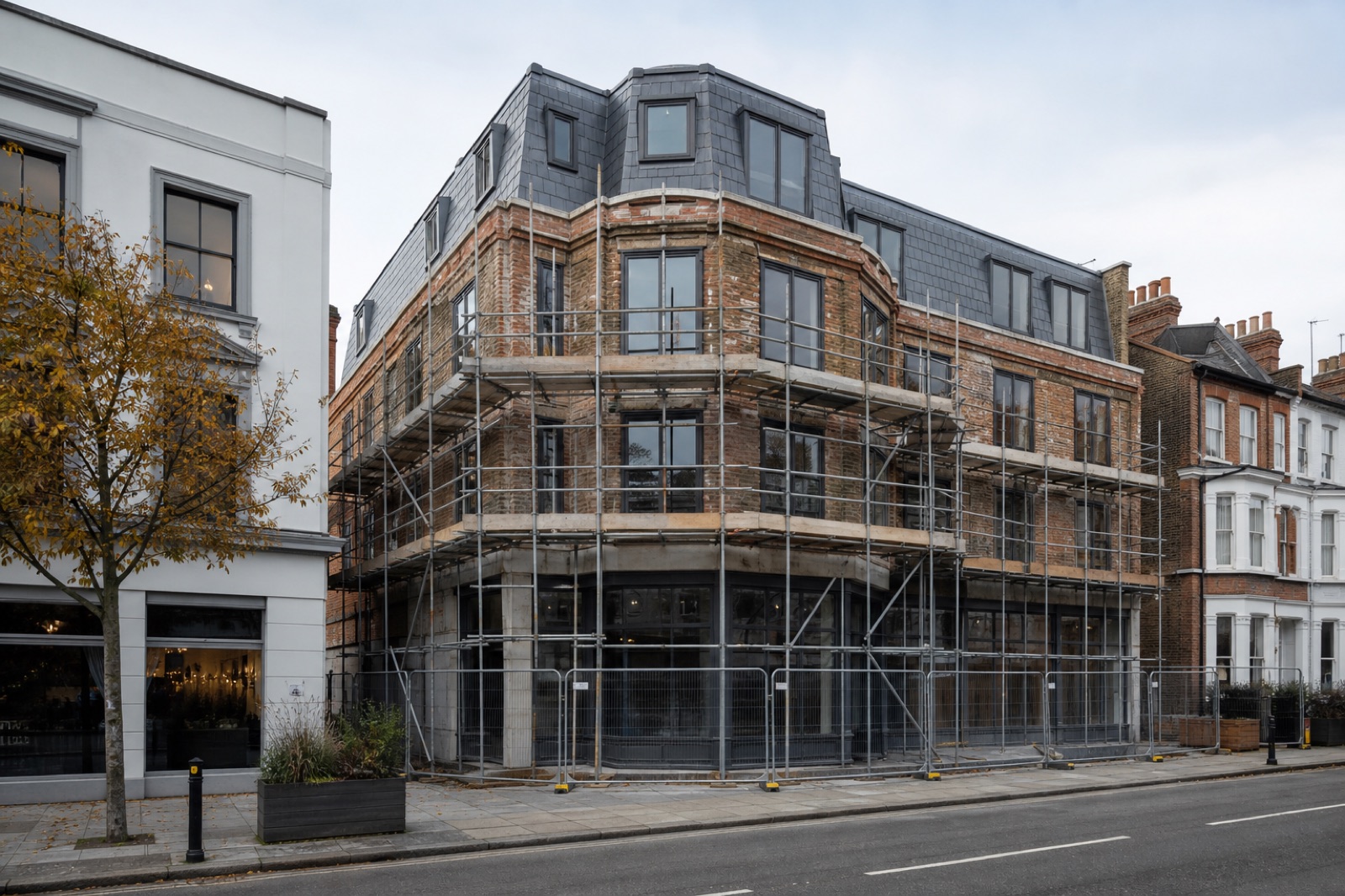
Bridging finance to convert or change use
HMO conversions, commercial-to-residential schemes and change-of-use projects turn on one thing first: the planning status. So does the finance.

Bridging for a conversion or change of use
Conversion and change-of-use projects add value by changing what a building is, not just how it looks. A house becomes an HMO, an office or shop becomes flats, a barn or pub becomes a home. These are the schemes with the most upside, and the most that can go wrong, because the value and the fundability both hinge on planning.
Planning status is the first thing we and the lender look at, because it drives everything else. A scheme with full planning permission granted, or one that qualifies under permitted development rights, or a use that is already lawful, is fundable on clear terms and has a credible end value. A scheme that still needs permission is a different, riskier proposition, and is usually funded only with a planning overlay or a lower loan until consent is in place. The exit value is the value of the converted, consented building, so without the planning the exit does not exist.
Planning activity is also a demand signal we watch closely. Local planning data, applications, approvals and permitted-development prior approvals, is a theme of this site because it tells you where conversion schemes are actually viable and where lenders are seeing live, consented stock. A scheme sitting in an area with strong, granted conversion activity is an easier case to place than one in a planning vacuum.
What we fund
- House-to-HMO conversions to a higher-yielding multi-let
- Commercial-to-residential schemes, including office or shop to flats
- Change of use under permitted development prior approval
- Barn, pub and other non-residential conversions with consent
- Reconfiguration that increases unit count or floor area with planning in place
Indicative terms
- Planningpermission granted, permitted development or lawful use drives the terms
- Indicative ratefrom around 0.88% per month (Bridging Trends, 2025 average)
- Fundingpurchase plus staged works against cost on larger schemes
- Termcommonly 9 to 18 months to cover conversion and exit
- Interestusually retained or rolled up; no monthly payments
- Exitsale of the converted units or refinance onto a term or buy-to-let mortgage
Indicative only. Terms vary by lender, security and borrower and are not an offer of finance.
How the finance works
We structure the facility around the planning position. Where permission is granted or the change of use is lawful or permitted, we can arrange a purchase tranche on day one with the conversion costs released in stages against build cost, monitored and signed off as the work proceeds. Where planning is not yet in place we typically arrange a lower day-one bridge against the existing value, with the works funding contingent on consent landing, or we wait until permission is granted before drawing the full facility. Interest is normally retained or rolled up, so the scheme carries no monthly payment during conversion. The gross facility is sized so retained interest and fees sit within the security value, and the term is set to cover the conversion plus the sale or remortgage of the finished units.
Which lenders back it
Conversion and change-of-use schemes are placed with refurbishment and development lenders who understand planning risk and staged drawdowns. The right desk depends on scale and on planning status: a permitted-development office-to-resi with prior approval can sit with a refurbishment lender, while a larger ground-up conversion needs a development lender with a monitoring surveyor and a build-cost facility. We are an introducer, not a lender. We match the scheme to a desk that reads the planning correctly, because a lender that misjudges consent risk either over-prices the case or pulls out late.
The exit
The exit is the value of the finished, consented building, realised one of two ways. The first is sale of the converted units at local market prices, evidenced with comparables for the completed scheme. The second is refinance: you let the HMO or the flats and remortgage onto a term or buy-to-let mortgage on the new, higher value, using that mortgage to redeem the bridge. Either way the planning consent is what creates the end value, so we evidence it before the loan is drawn: the permission, the prior approval or the lawful-use position, plus the comparable values or the indicative term mortgage. Without confirmed planning there is no exit, which is why we lead with it.
Finance that suits this
- Refurbishment financeSuits permitted-development and lighter conversions funded against cost.
- Development financeFor larger ground-up conversions needing staged build-cost drawdowns and monitoring.
Discuss a conversion or change of use
A view on fundability within one working day.
Frequently asked questions
Do I need planning permission before I can get finance?
It depends on the scheme. Permission granted, permitted development prior approval or a lawful existing use makes the case fundable on clear terms. Where consent is not yet in place, lenders usually advance a lower day-one loan and hold the works funding back until permission lands.
Why does planning status matter so much to the lender?
Because the exit value is the value of the converted, consented building. Without planning, the higher end value does not exist, so the lender cannot underwrite the exit. Planning drives both how much you can borrow and whether the case is fundable at all.
Can I fund an HMO conversion with a bridge?
Yes. A conversion bridge funds the purchase and the works, then exits onto a buy-to-let or HMO mortgage once the multi-let is let and valued, or onto a sale. The terms depend on the planning and licensing position.
How is the conversion work paid for?
On larger schemes the lender releases the works budget in stages against build cost, with a monitoring surveyor signing off each drawdown. Smaller permitted-development conversions can be funded more simply against cost or value.
How does local planning data help?
Planning applications and approvals show where conversion schemes are viable and where lenders see live, consented stock. A scheme in an area with strong granted conversion activity is easier to place than one with little local planning movement.
What is my exit?
Either sale of the finished units at local market prices, or refinance onto a term or buy-to-let mortgage on the higher post-conversion value. The exit always depends on confirmed planning consent.
What does it cost?
An arrangement fee, valuation, legal and monitoring costs, and interest at an indicative rate from around 0.88% per month on the 2025 average, usually retained or rolled up so there is no monthly payment.
Planning a conversion or change of use?
Tell us about the property and the exit and we will come back with a view on fundability and likely terms.