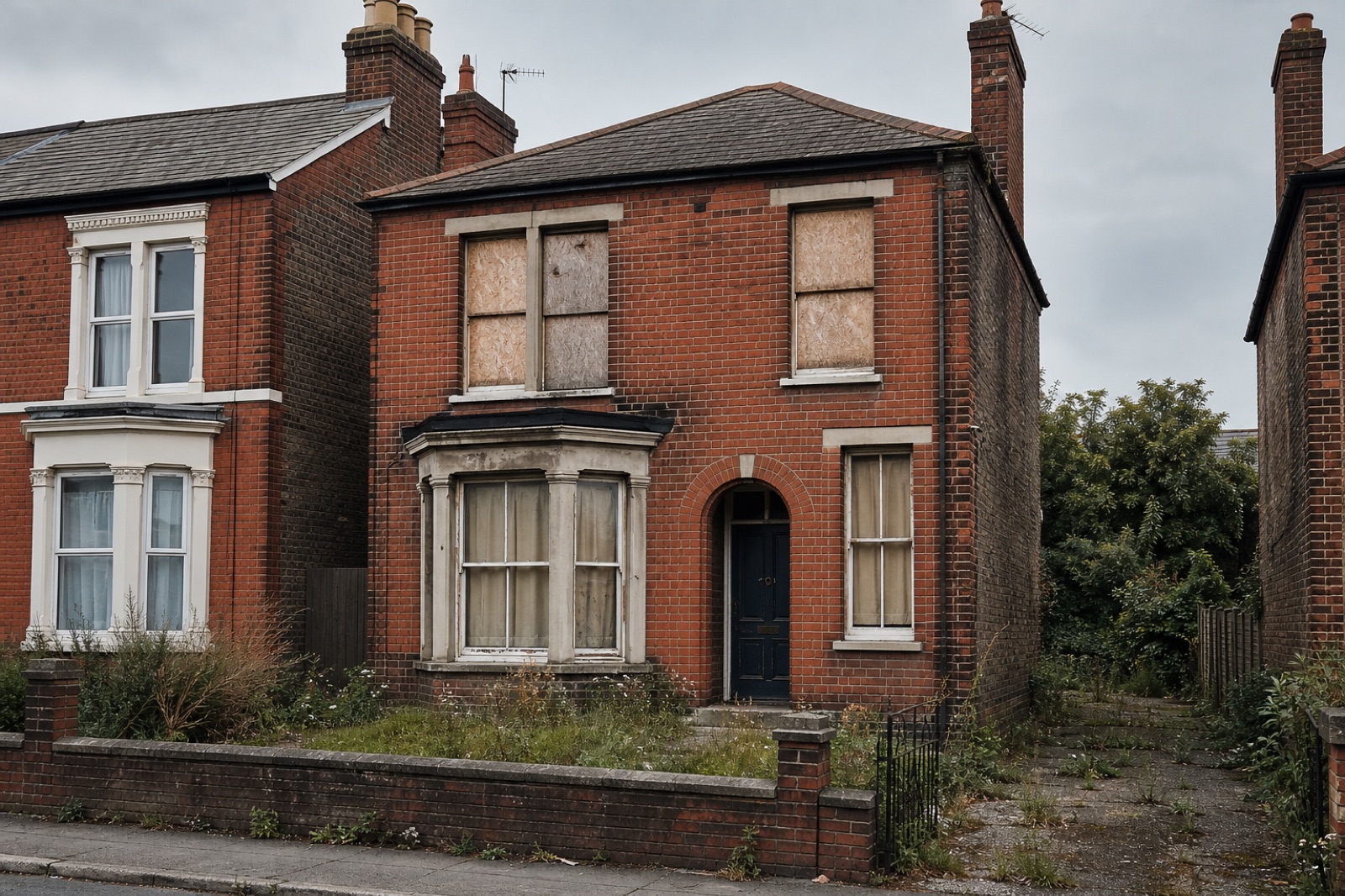
Bridging finance to buy an unmortgageable property
Uninhabitable, short-lease or non-standard property that no mortgage lender will touch. A bridge buys it, you make it mortgageable, then you refinance.

Bridging for an unmortgageable property
Mortgage lenders need a property to be habitable, on standard construction and on an acceptable lease before they will lend. Plenty of property fails that test: no working kitchen or bathroom, structural defects, damp, a short lease, non-standard construction such as concrete or timber frame, or a title issue. A mainstream lender simply declines. A bridge does not, because it lends against the value and the exit, not against immediate mortgageability.
The strategy is straightforward. We arrange a bridge to buy the property as it stands, you carry out the works or resolve the issue that made it unmortgageable, a lease extension, the structural repair, the new kitchen and bathroom, and the property then qualifies for a normal mortgage or a clean sale. The bridge is the tool that gets you from unmortgageable to mortgageable.
This is one of the oldest uses of bridging and a staple of the auction market, where unmortgageable lots are common. Because the bridge does not depend on the property being lendable on day one, it opens up stock that other buyers, the ones who need a mortgage, cannot compete for, often at a keener price.
What we fund
- Uninhabitable property with no working kitchen or bathroom
- Short-lease flats needing a lease extension before a mortgage is possible
- Non-standard construction such as concrete, steel or timber frame
- Properties with structural defects, damp or subsidence to remedy
- Title or legal issues that must be resolved before a mortgage can be placed
Indicative terms
- Indicative ratefrom around 0.88% per month (Bridging Trends, 2025 average)
- Typical LTVaround 60% on average; up to around 75% on light works (indicative)
- Works fundingavailable alongside purchase where the property needs repair
- Termcommonly 6 to 12 months to fix and refinance or sell
- Interestusually retained or rolled up; no monthly payments
- Exitrefinance onto a normal mortgage or sale at market price
Indicative only. Terms vary by lender, security and borrower and are not an offer of finance.
How the finance works
We arrange the bridge against the property in its current, unmortgageable state, working to the lower of purchase price and valuation. Where the property needs physical work to become mortgageable we can add a refurbishment element, advancing a purchase tranche and releasing the works budget against cost, with light cosmetic cases going up to an indicative ceiling around 75% loan-to-value. Where the issue is legal rather than physical, such as a short lease, the bridge funds the purchase while you serve notice and complete the lease extension. Interest is normally retained or rolled up, so there is no monthly payment while the property is brought up to standard. The gross-to-net is modelled up front so you know the exact day-one net figure.
Which lenders back it
Unmortgageable property is bread and butter for the specialist short-term lenders and the auction desks, who are comfortable lending where a high-street lender will not. The right desk depends on what makes the property unlendable: a structural case suits a refurbishment lender with a staged works facility, a short-lease case suits a lender comfortable with the lease-extension timetable, and a non-standard-construction case needs a lender whose valuer will engage with the construction type. We are an introducer, not a lender, and we steer each case to the desk that understands that particular flavour of unmortgageability.
The exit
The exit is the property becoming mortgageable or saleable once the issue is resolved. The first route is refinance: you fix the defect, extend the lease or complete the works, the property then meets mainstream lending criteria, and you remortgage onto a normal residential, buy-to-let or term mortgage that redeems the bridge. The second route is sale at the local market price to a buyer who can now mortgage it, or to a cash buyer. We evidence the chosen exit before the loan is drawn, an indicative mortgage offer and an achievable value for a refinance, or comparable sales for a sale, because the lender underwrites the route out of the bridge as closely as the way in.
Finance that suits this
- Refurbishment financeFunds the works that make a defective property mortgageable.
- Bridging financeBuys the property as it stands, including legal-only issues like a short lease.
Discuss an unmortgageable property
A view on fundability within one working day.
Frequently asked questions
Can I get finance for an uninhabitable property?
Yes. Bridging lends against value and the exit rather than immediate mortgageability, so it can fund a property with no working kitchen or bathroom, structural defects or other issues that a mortgage lender would decline.
What makes a property unmortgageable?
Common reasons are an uninhabitable condition, a short lease, non-standard construction such as concrete or timber frame, structural defects, damp or subsidence, or a title and legal issue. A bridge can fund all of these while you resolve them.
How do I exit the bridge?
Either refinance onto a normal mortgage once the property is mortgageable, or sell at market price. We agree and evidence the exit before the loan is drawn.
Can the bridge fund a lease extension?
Yes. Where a short lease is the only barrier, the bridge funds the purchase and the lease-extension cost while you complete the statutory process, after which the flat qualifies for a normal mortgage.
How much can I borrow?
Indicatively around 60% loan-to-value on average, rising to around 75% on light cosmetic works. The figure depends on the property and the works, and is illustrative, not an offer.
Do I make monthly payments?
Usually not. Interest is normally retained or rolled up and settled when the bridge is repaid, so there is no monthly payment while the property is brought up to standard.
What does it cost?
An arrangement fee, valuation, legal costs, any works-monitoring fees, and interest at an indicative rate from around 0.88% per month on the 2025 average. We give you the gross-to-net figures before you commit.
Planning an unmortgageable property?
Tell us about the property and the exit and we will come back with a view on fundability and likely terms.